|
|
|
|
B100 Biodiesel
www.B100Biodiesel.com
What
is
B100 Biodiesel?
B100 Biodiesel is 100% Biodiesel that is produced from oilseeds, crude vegetable oil, refined vegetable oil and waste vegetable oil. These fuels are over 90% less polluting than the "dirty diesel" produced from fossil fuels and the 10% (nitrogen oxides) is easily captured with selective catalytic reduction.
Biofuel Industries has been involved in the biodiesel industry since our company's Principal was interviewed by National Geographic magazine for their article on biodiesel they were preparing in 2005;
"Cheaper Veggie Diesel May Change the Way We Drive."
http://news.nationalgeographic.com/news/2005/11/1114_051114_biodiesel_2.html
We are interested in acquiring Biodiesel Refineries that are no longer operating as long as they have superior technology and are located in the U.S.
We specialize in clean power generation systems. These may include our natural gas engines that are fueled with Biomethane or Synthesis Gas or diesel engines that are fueled with B100 Biodiesel.
|
|

"Changing the Way the
World Makes and Uses Energy"

Clean Power Generation Solutions
Our "Integrated" CHP
Systems (Cogeneration
and Trigeneration)
Plants
Have Very High Efficiencies, Low Fuel Costs & Low Emissions and
can be fueled
with Biomethane,
B100 Biodiesel,
Natural Gas and Synthesis
Gas.
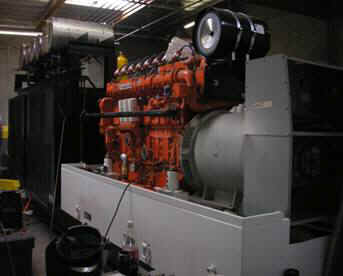
The Effective Heat Rate for the CHP System below is
4100 btu/kW with a System Efficiency rating of 92%.
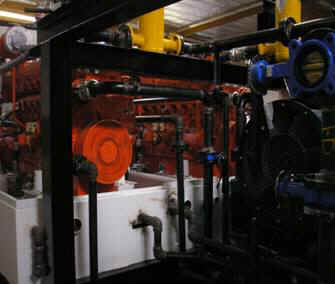
The CHP System
below is Rated at 900 kW and Features:
(2) Natural Gas Engines @ 450 kW each on one Skid with Optional
Selective Catalytic Reduction system that removes Nitrogen
Oxides to "non-detect."

Our CHP Systems may be the best solution for your company's economic and environmental sustainability as we "upgrade" natural gas to clean power with our clean power generation solutions.
Our Emissions Abatement solutions reduce Nitrogen Oxides to "non-detect" which means our CHP Systems can be installed and operated in most EPA non-attainment regions!
Our CHP Systems - operating in either cogeneration or trigeneration configuration, may be the optimum power and energy solution for customers wanting increased power reliability and decreased energy and environmental costs.
A few of the clients and markets that may benefit from our CHP Systems include the following:
Airports
Casinos
Central Plants
Colleges & Universities
Dairies
Data Centers
District Heating & Cooling plants
Food Processing Plants
Golf/Country Clubs
Government Buildings and Facilities
Grocery Stores
Hospitals
Hotels
Manufacturing Plants
Military Bases
Nursing Homes
Office Buildings / Campuses
Radio Stations
Refrigerated Warehouses
Resorts
Restaurants
Schools
Server Farms
Shopping centers
Supermarkets
Television Stations
Theatres
energy
system, through a Power
Purchase Agreement that guarantees
a minimum 10% reduction in our client's energy expenses.
(NOTE: Our
engineering
and EPC services may be provided by one of our affiliated
companies - one of which is a Top ENR ranked EPC company.
To receive a preliminary no-obligation review of your energy, engineering or
project plans,
send an introductory email to us at the following email address:
We buy and sell B100 Biodiesel and have plans to start producing and blending our own, "home-grown, clean, renewable, and American made" B100 Biodiesel, to help end our reliance on unstable, non-renewable, and "dirty" middle-east oil that pollutes our environment and causes inflated energy prices.
B100 Biodiesel has numerous advantages to petroleum diesel - it's renewable, non-toxic, biodegradable, and produced by American and Canadian farmers. B100 Biodiesel is 100 % biodiesel fuel, and reduces greenhouse gas emissions by 78.3%, particulate matter by 55.4%, hydrocarbons by 56.3%, mutagenicity by 80-90% and sulfur by 100%.
B100 Biodiesel produced from a variety of feedstock, grown on American and Canadian farms, will help to end our/your country's reliance on unstable, non-renewable, and "dirty" middle-east oil that pollutes our environment and causes inflated energy prices.
Our company builds new Biodiesel Refineries throughout the U.S. and now, developing countries with a variety of feedstocks that include; canola, coconut, jatropha, jojoba, mustard seed, palm oil, peanuts, rapeseed, and soybean, among others.
Key Reaction. The main reaction for converting oil to biodiesel is called transesterification. The transesterification process reacts an alcohol (like methanol) with the triglyceride oils contained in vegetable oils, animal fats, or recycled greases, forming fatty acid alkyl esters (biodiesel) and glycerin. The reaction requires heat and a strong base catalyst, such as sodium hydroxide or potassium hydroxide. The simplified transesterification reaction is shown below.
|
base |
|
Triglycerides + Free Fatty Acids (<4%) + Alcohol ——> Alkyl esters + glycerin |
Pretreatment Reaction. Some feedstocks must be pretreated before they can go through the transesterification process. Feedstocks with less than 4% free fatty acids, which include vegetable oils and some food-grade animal fats, do not require pretreatment. Feedstock with more than 4% free fatty acids, which include inedible animal fats and recycled greases, must be pretreated in an acid esterification process. In this step, the feedstock is reacted with an alcohol (like methanol) in the presence of a strong acid catalyst (sulfuric acid), converting the free fatty acids into biodiesel. The remaining triglycerides are converted to biodiesel in the transesterification reaction.
|
acid |
|
Triglycerides + Free Fatty Acids (>4%) + Alcohol ——> Alkyl esters + triglycerides |
Acid Esterification. Oil feedstocks containing more than 4% free fatty acids go through an acid esterification process to increase the yield of biodiesel. These feedstocks are filtered and preprocessed to remove water and contaminants, and then fed to the acid esterification process. The catalyst, sulfuric acid, is dissolved in methanol and then mixed with the pretreated oil. The mixture is heated and stirred, and the free fatty acids are converted to biodiesel. Once the reaction is complete, it is dewatered and then fed to the transesterification process.
Transesterification. Oil feedstocks containing less than 4% free fatty acids are filtered and preprocessed to remove water and contaminants and then fed directly to the transesterification process along with any products of the acid esterification process. The catalyst, potassium hydroxide, is dissolved in methanol and then mixed with and the pretreated oil. If an acid esterification process is used, then extra base catalyst must be added to neutralize the acid added in that step. Once the reaction is complete, the major co-products, biodiesel and glycerin, are separated into two layers.
Methanol recovery. The methanol is typically removed after the biodiesel and glycerin have been separated, to prevent the reaction from reversing itself. The methanol is cleaned and recycled back to the beginning of the process.
Biodiesel refining. Once separated from the glycerin, the biodiesel goes through a clean-up or purification process to remove excess alcohol, residual catalyst and soaps. This consists of one or more washings with clean water. It is then dried and sent to storage. Sometimes the biodiesel goes through an additional distillation step to produce a colorless, odorless, zero-sulfur biodiesel.
Glycerin refining. The glycerin by-product contains unreacted catalyst and soaps that are neutralized with an acid. Water and alcohol are removed to produce 50%-80% crude glycerin. The remaining contaminants include unreacted fats and oils. In large biodiesel plants, the glycerin can be further purified, to 99% or higher purity, for sale to the pharmaceutical and cosmetic industries.
What
is Transesterification?
Transesterification is the chemical
process for producing B100
Biodiesel from vegetable oil
and animal fats which takes place in all Biodiesel
Refineries.
In
transesterification, vegetable oils
and animal fats are processes in a chemical reaction with methanol or ethanol in
the presence of a catalyst such as lye. After the chemical reaction occurs, the components of
the vegetable oil (or animal fat) break downs to form new compounds.
Triglycerides are converted into alkyl esters (biodiesel). If methanol is used,
methyl esters are formed and if ethanol is used, ethyl esters are formed. Both
of these are "biodiesel" fuel. In the transesterification process, alcohol replaces glycerin.
Glycerin that has been separated during transesterification is released as a byproduct of the biodiesel production process. The glycerin will either sink to the bottom of
the reaction vessel or rise to the surface depending on its phase. The
glycerin is easily separated by a centrifuge.
After
separation of glycerin, the transesterification process is complete with the B100
Biodiesel then being sent to tanks onsite, for eventual shipping by truck,
barge, rail or ship, to customers.
The biodiesel produced through transesterification has lower viscosity which makes it easy to completely replace petroleum diesel in
the fuel tanks for use in diesel engines.
Global Warming. The combustion of fossil fuels such as coal, oil, and natural gas has increased the concentration of carbon dioxide in the earth's atmosphere. The carbon dioxide and other so-called greenhouse gases allow solar energy to enter the Earth's atmosphere, but reduce the amount of energy that can re-radiate back into space, trapping energy and causing global warming.
One environmental benefit of replacing fossil fuels with biomass-based fuels is that the energy obtained from biomass does not add to global warming. All fuel combustion, including fuels produced from biomass, releases carbon dioxide into the atmosphere. But, because plants use carbon dioxide from the atmosphere to grow (photosynthesis), the carbon dioxide formed during combustion is balanced by that absorbed during the annual growth of the plants used as the biomass feedstock—unlike burning fossil fuels which releases carbon dioxide captured billions of years ago. You must also consider how much fossil energy is used to grow and process the biomass feedstock, but the result is still substantially reduced net greenhouse gas emissions. Modern, high-yield corn production is relatively energy intense, but the net greenhouse gas emission reduction from making ethanol from corn grain is still about 20%. Making biodiesel from soybeans reduces net emissions nearly 80%. Producing ethanol from cellulosic material also involves generating electricity by combusting the non-fermentable lignin. The combination of reducing both gasoline use and fossil electrical production can mean a greater than 100% net greenhouse gas emission reduction. In the case of ethanol from corn stover, we have calculated that reduction to be 113%.
Vehicle Emissions. Petroleum diesel and gasoline consist of blends of hundreds of different hydrocarbon chains. Many of these are toxic, volatile compounds such as benzene, toluene, and xylenes, which are responsible for the health hazards and pollution associated with combustion of petroleum-based fuels. Carbon monoxide, nitrogen oxides sulfur oxides and particulates, are other specific emissions of concern. A key environmental benefit of using biofuels as an additive to petroleum-based transportation fuels is a reduction in these harmful emissions.
Both bioethanol and biodiesel are used as fuel oxygenates to improve combustion characteristics. Adding oxygen results in more complete combustion, which reduces carbon monoxide emissions. This is another environmental benefit of replacing petroleum fuels with biofuels. Ethanol is typically blended with gasoline to form an E10 blend (5%-10% ethanol and 90%-95% gasoline), but it can be used in higher concentrations such as E85 or in its pure form. Biodiesel is usually blended with petroleum diesel to form a B20 blend (20% biodiesel and 80% petroleum diesel), although other blend levels can be used up to B100 (pure biodiesel).
What is B2 Biodiesel?
Pure biodiesel or B100 Biodiesel, is a non-toxic, biodegradable, renewable, carbon-neutral, sulfur-free, home-grown fuel that replaces petroleum diesel. When blended with equal parts of B100 biodiesel, creates B50 biodiesel, or 50% biodiesel and 50% petroleum diesel. Therefore, B2 Biodiesel, is comprised of a "blend" of 2% Biodiesel and 98% petroleum diesel.
What is B20 Biodiesel?
B20 Biodiesel is one the most popular biodiesel blends presently available thoughout much of the U.S., Canada and Europe. Pure biodiesel or B100 Biodiesel, is a non-toxic, biodegradable, renewable, carbon-neutral, sulfur-free, domestic fuel that when mixed with four parts petroleum diesel to one part biodiesel creates B20 biodiesel, or 20% biodiesel and 80% petroleum diesel.
What is B50 Biodiesel?
Pure biodiesel or
B100 Biodiesel, is a non-toxic,
biodegradable, renewable, carbon-neutral, sulfur-free, domestic petroleum
diesel when blended with equal parts of B100
Biodiesel creates B50
biodiesel, or 50% biodiesel and 50% petroleum diesel.
What is B100 Biodiesel?
Pure biodiesel is referred to as B100 Biodiesel, which is a non-toxic, biodegradable, renewable, carbon-neutral, sulfur-free, domestically "grown" biofuel. B100 Biodiesel is refined from many American-grown fuel/energy crops such as soybeans, canola, rapeseed and even palm trees.
Can B20 Biodiesel cause, or prevent problems for my diesel engine?
This depends on the age of the car. Biodiesel is a solvent and
may affect some seals, gaskets, and adhesives, particularly those made before 1993 and those
made from natural or nitrile rubber. Most diesel engines manufactured
after 1994 have been constructed with gaskets and seals that are biodiesel resistant. Earlier engine
models or rebuilds may use older gasket and seal materials and present a risk of swelling,
leaking, or failure. Fuel pumps may contain rubber valves that may fail.
B20 Biodiesel cleans dirty engine deposits, which may result in you needing an initial fuel filter change.
B20 Biodiesel fuel is being widely used in various areas around the United States and Canada. Its production and distribution is expanding rapidly throughout the U.S. and Canada.
Now that
B20 Biodiesel has been gaining wide-spread
distribution and popularity, questions are being asked for which some of
the more common questions are answered below.
Does B20 Biodiesel perform as well as regular petroleum diesel?
Yes! In most cases you will not be unable to tell the difference between
the two fuels, although some notice the diesel exhaust lightening in color
due to the reduced emissions. B20 Biodiesel
can be used in existing engines and fuel injection equipment with little
impact to operating performance. In more than 30 million miles of in-field
demonstrations, B20 Biodiesel
has produced similar fuel consumption, horsepower, torque, and haulage
rates as conventional diesel fuel. B20 Biodiesel
also has superior lubricity, which helps prevent engine wear, plus it has
a higher cetane number than U.S. diesel fuel, which classifies
B20 Biodiesel as a premium
grade fuel. B20 Biodiesel has a
BTU content that falls in the range between #1 diesel fuel and #2 diesel
fuel.
How does B20 Biodiesel
fuel get shipped
and distributed?
B20 Biodiesel is shipped
throughout the U.S. and Canada as
B100 Biodiesel. Once it
arrives in at our partner company's bulk fuel facilities, it is mixed in
various ratios of between 20%-80% with petroleum diesel. To produce B20 Biodiesel,
we blend one part of
B100 Biodiesel with 4 parts
of petroleum diesel. The blended B20 Biodiesel
is then delivered to our fuel users and public sales points throughout the
U.S. and Canada.
Can I use B20 Biodiesel
during the winter
and long periods of cold weather?
Yes! In fact, B20 Biodiesel
has almost the same cold weather properties as regular
petroleum diesel. B20 Biodiesel is used throughout the U.S. National Parks
Services, including cold-weather climates such as Yellowstone National Park,
without any problems or complaints.
Clean
the Air We Breathe!
B20 Biodiesel burns
significantly cleaner than regular petroleum diesel. This means engines in
cars powered by B20 Biodiesel
fuel will significantly fewer harmful exhaust emissions than those of
regular petroleum diesel. In fact, the higher the percentage of biofuel
used, the greater the reduction in dangerous emissions.
More
specifically, the
B20 Biodiesel fuel used in your
diesel engine means you are reducing the amount of harmful emissions from
your car or truck into our air by the following amounts:
• Carbon monoxide -12.6%
• Hydrocarbons -11.0%
• Particulates -18.0%
• Air toxics -12%–20%
• Mutagenicity -20%
Grow Your Own "Green" BioDiesel
Increase
Profits for Farmers, Improve the Local and Global Economy and
Ecology,
Decrease Pollution and End the Monopoly of OPEC/Foreign Supplies of
"Dirty" Fuels!
At an average production rate of 130 gallons per acre, Canola or Rapeseed Oil ("BioDiesel") is one of the preferred energy crops in the U.S. and Europe.
The
following information from the EPA's Purpose
site regarding B100 Biodiesel
The purpose of this document is to explain and clarify EPA’s regulatory requirements for biodiesel producers and biodiesel blenders/users. While the term biodiesel generally has a broad interpretation, as used in this guidance document, its meaning is directed specifically to biodiesel-ester.
Background
Use of renewable fuels, such as ethanol and biodiesel, in motor vehicle fuels has been growing rapidly for a variety of reasons. Biodiesel usage has been increasing particularly rapidly. This widespread increase in biodiesel usage has highlighted a need to promote adherence to the primary industry standard for biodiesel (B100 blendstock used to produce biodiesel blends), ASTM International (ASTM) D 6751, and consider new ASTM standards for blends of biodiesel and conventional petroleum-based diesel. EPA is also currently coordinating significant additional testing to resolve issues related to the effect of biodiesel on vehicle emissions performance.
Biodiesel is a fuel made from plant or animal feedstocks, and may be used in conventional diesel engines. Biodiesel is comprised of specific chemical components defined by ASTM as "mono-alkyl esters of long chain fatty acids derived from vegetable oils or animal fats." In the United States, most biodiesel is made from soybean oil. However, canola oil, sunflower oil, recycled cooking oils, palm oil, animal fats, and other oils are also used as feedstocks.
Biodiesel is typically manufactured through a process called "trans-esterification." This process uses an industrial alcohol (typically methanol, sometimes ethanol) and a catalyst (sodium methylate, can be sodium hydroxide) to convert the base plant oil or animal fat into a fatty-acid mono-alkyl ester fuel (biodiesel), with glycerin as a byproduct. Biodiesel in its pure form is known as B100, but it can be blended with conventional diesel fuel. The most common blends are B5 (5 percent biodiesel and 95 percent conventional diesel) and B20 (20 percent biodiesel and 80 percent conventional diesel).
Biodiesel is registered with the U.S. Environmental Protection Agency (EPA) as a motor vehicle diesel fuel and motor vehicle diesel fuel additive. It is registered for use at any blend level up to B100 in highway diesel vehicles.
Biodiesel, as discussed in this document, does not include renewable diesel. Renewable diesel is a non-ester based diesel blend derived from non-petroleum resources, such as plant oil or animal fats or wastes. Because renewable diesel is processed in a refinery along with petroleum stocks, it becomes indistinguishable from petroleum diesel, and does not need to be blended downstream of the refinery.
Neat vegetable oils and recycled greases (also called waste cooking oil or yellow grease) that have not been processed into mono-alkyl esters are not biodiesel. These raw oils, used as fuel extenders or fuel substitutes, are not registered with EPA and are not legal to use as a motor vehicle fuel. Furthermore, cooking oil is physically and chemically different than diesel fuel and its use in conventional engines will generally cause negative effects on emissions and engine durability.
Because of the potential for increased emissions, it is considered unlawful tampering to convert a vehicle designed for diesel fuel to operate on waste oil without EPA certification. To date, EPA has not certified any conversions for waste oils. Even with EPA certification, conversions may violate the terms of the vehicle warranty. For more information on the certification process, please visit EPA's Web site at:
www.epa.gov/otaq/cert/dearmfr/cisd0602.pdf
EPA Requirements for Biodiesel Producers under 40 CFR Part 79 and Part 80
Section 211 of the Clean Air Act provides EPA with the authority to regulate fuels and fuel additives in order to obtain information about emissions and health effects related to fuels and their additives, and where appropriate to reduce the risk to public health from exposure to their emissions. In part, regulations implementing this authority are codified in Part 79 of the Code of Federal Regulations (40 CFR Part 79), which requires that each manufacturer or importer of motor vehicle gasoline, motor vehicle diesel fuel, and their additives, have their product registered by EPA prior to its introduction into commerce. Registration involves providing a chemical description of the product and certain technical, marketing and health-effects information. This allows EPA to identify the likely combustion and evaporative emissions. In many cases, health-effects testing is required for a product to maintain its registration or before a new product can be registered. EPA uses this information to identify products whose emissions may pose an unreasonable risk to public health, warranting further investigation and/or regulation.
Producers
of biodiesel for highway use are manufacturers of motor vehicle fuel
or fuel additive. As part of EPA’s registration process for fuel
manufacturers, biodiesel producers must complete and submit EPA
registration form 3520-12 (Fuel Manufacturer Notification for Motor
Vehicle Fuel, available at http://www.epa.gov/otaq/regs/fuels/ffarsfrms.htm
and also provide the following information:
The feedstocks used to produce biodiesel.
A description of the manufacturing process used to produce biodiesel.
Emissions and health effects testing on the manufacturer’s biodiesel, or alternatively proof of registration with the National Biodiesel Board (NBB) showing access to the Tier 1 and Tier 2 emissions and health effects testing data.
Test results from a representative sample of the manufacturer’s biodiesel demonstrating compliance with the parameters specified in ASTM D 6751.
Since emissions and health effects testing for biodiesel is very expensive, biodiesel producers normally arrange for access to "group data" on the testing of biodiesel which is representative of all products in that group. NBB has provided EPA with the required group data on biodiesel that met the nationally accepted biodiesel standard at the time of testing, which was 1998. This standard has since been adopted as ASTM D 6751, and continues to undergo refinements. Thus, a biodiesel producer may meet EPA’s emissions and health effects testing requirement for biodiesel by reaching an agreement with NBB for access to NBB’s registration data, and making a certification to EPA that the producer has notified NBB of the use of NBB’s data and reimbursed NBB for the use of their data. Any biodiesel producer who does not have access to NBB’s data must provide EPA with its own emissions and health effects test data as part of the registration process.
In addition to registering with EPA under 40 CFR Part 79, biodiesel producers are also required to register under 40 CFR Part 80 as a refiner. This applies to both highway and nonroad biodiesel. Under 40 CFR Part 80, diesel fuel producers must complete and submit EPA registration forms 3520-20A (Fuels Programs Company/Entity Registration) and 3520-20B1 (Diesel Programs Facility Registration). Both of these forms are available at http://www.epa.gov/otaq/regs/fuels/rfgforms.htm
Highway and nonroad biodiesel producers must also comply with all of EPA’s regulatory requirements for diesel fuel producers in 40 CFR Part 80, Subpart I. The primary standard for diesel fuel producers in Subpart I is the 15 ppm sulfur standard, which will be phasing in for all diesel fuel from now through 2014. Although biodiesel typically contains less than 15 ppm sulfur, biodiesel producers are still required to test each of their biodiesel batches for sulfur and appropriately designate their product as required by Subpart I. Subpart I also contains diesel fuel standards for minimum cetane index (40), or a maximum aromatics content (35 volume percent), which biodiesel typically meets. Lastly, Subpart I contains reporting and recordkeeping requirements for diesel fuel manufacturers.
EPA Guidance for Biodiesel Blenders/Users
Although the Part 79 registration is for biodiesel use at any blend level up to B100 in highway diesel vehicles, ASTM D 6751 points out that a considerable amount of experience exists with blends containing 20 percent biodiesel and 80% conventional diesel (B20). Thus, ASTM D 6751 recommends that biodiesel blends containing more than 20 percent biodiesel should be evaluated on a case-by-case basis. ASTM D 6751 also recommends that biodiesel users consult the equipment manufacturer owner’s manual regarding the suitability of using biodiesel or biodiesel blends in a particular engine or application. Many engine manufacturers currently limit warranty coverage to diesel fuel containing no more than 5 percent biodiesel.
Consumers should be careful only to buy biodiesel from a reputable dealer. Improperly processed biodiesel may contain unreacted or partially reacted oils or fats (measured by the total glycerin), which can cause the fuel to gel at higher than expected temperatures. ASTM D 6751 specifies maximum allowable concentrations of free glycerin and total glycerin. Also, consumers should be careful that they are not inadvertently purchasing straight vegetable oil instead of biodiesel. One method of ensuring quality biodiesel is to buy from producers or marketers that are certified in the voluntary national biodiesel accreditation BQ 9000 program (see http://www.bq-9000.org for details).
Requirements for handling and using biodiesel may differ from requirements for petroleum-based diesel. For example, biodiesel can gel at low temperatures and may require special handling in cold climates during winter. Other possible problems that may be caused by B100 use include degradation of some fuel lines and gaskets (e.g. those made from nitrile and natural rubber) and reduced power or fuel economy. Consumers should check with their vehicle manufacturers for recommendations about biodiesel use or consult the information available on the NBB web site at: http://www.biodiesel.org/resources/fuelfactsheets under ‘Engine Manufacturers’.
Engine manufacturers have expressed concern about degradation of biodiesel due to long storage times, which may cause biodiesel to exceed the limits in ASTM D 6751 for acid number, viscosity or sediment. For example, NBB recommends that B100 be stored for no more than 6 months before usage. The Department of Energy document "Biodiesel Handling and Use Guidelines" (available at http://www.nrel.gov/vehiclesandfuels/npbf/pdfs/40555.pdf) contains a detailed discussion on the stability of B100 and B20 and is a good source of information on biodiesel in general.
Current Activities Regarding Biodiesel
Emissions Performance
Having an accurate assessment of biodiesel effects on diesel engine emissions is critical to state, regional and national organizations for making informed decisions regarding biodiesel use. EPA’s 2002 review of then available test data entitled "A Comprehensive Analysis of Biodiesel Impacts on Exhaust Emissions" concluded that biodiesel improves HC, CO and particulate emissions while slightly increasing NOx. However, the magnitude of biodiesel NOx impact still remains controversial. EPA has recently shown experimentally that this impact is proportional to test cycle load. Using this information and working in cooperation with the stakeholders, EPA has developed a proposal for a Collaborative Biodiesel Emission Test Program to address the NOx issue. The funding for this test program is currently uncertain. However, we continue to believe that a well-designed study such as this is necessary to accurately determine the effect of biodiesel on emissions. In addition, EPA is currently updating the 2002 biodiesel study using test data which have become available in recent years.
Standards Harmonization
EPA is also working with several standard-setting organizations, both nationally and internationally, and other government organizations in a general effort to harmonize standards for biofuels produced from a variety of feedstocks and blended in petroleum-based fuels at various concentrations. EPA’s regulations codifying the Renewable Fuel Standard Program established in the Energy Policy Act of 2005 (EPAct) were recently finalized in 40 CFR Part 80, Subpart K, and provide significant flexibility for biofuels producers, refiners and importers to properly account for the large volumes of renewable fuels that must be blended into gasoline or diesel fuel under EPAct. Since EPAct does not mandate where biofuels must be produced or blended into gasoline or diesel fuel, EPA encourages other standard-setting organizations, particularly state governments, to allow biofuels producers and biofuels blenders the flexibility to decide where biofuels can be most economically produced and blended into gasoline or diesel fuel. EPA is promoting standards that will result in nationally accepted, consistent, biodiesel quality levels and blend rates.
EPA is also participating in several ongoing ASTM activities regarding biodiesel quality and standards. ASTM recently added a stability specification to ASTM D 6751 and expanded the applicability of ASTM D 6751 to all diesel fuels (ASTM D 6751 was previously applicable to just highway diesel fuel). EPA’s renewable fuels program regulations, recently finalized in 40 CFR Part 80, Subpart K, require biodiesel producers to meet all specifications in the most recent version of the standard (ASTM D 6751-07) for biodiesel to be considered a renewable fuel, and included in compliance calculations under Subpart K (see 40 CFR 80.1101(h)(3) and 80.1115(b)). ASTM is also considering whether to expand their standard for petroleum-based diesel fuel (ASTM D 975) to include diesel blends that contain up to 5 volume percent biodiesel, and is developing a standard for B6 to B20.
Enforcement Activities
EPA also plans to increase enforcement efforts to ensure that biodiesel producers are complying with EPA’s standards, in particular ensuring that all biodiesel meets ASTM D 6751. Section 211(a) of the Clean Air Act gives the Administrator of the EPA regulatory authority to "…designate any fuel or fuel additive…and…no manufacturer or processor of any such fuel or fuel additive may sell, offer for sale, or introduce into commerce such fuel or additive unless the Administrator has registered such fuel or additive…." This is codified in EPA’s regulations at 40 CFR 79.4(a)(1), which state that "no manufacturer of fuel designated under this part shall … sell, offer for sale, or introduce into commerce such fuel unless the Administrator has registered such fuel."
ASTM D 6751 was first published in 2002 (ASTM D 6751-02). Since then it has been periodically revised and updated. EPA’s routine practice has been to register biodiesel that meets the version of ASTM D 6751 in effect at the time of registration. Because most biodiesel has been registered with EPA since 2002, EPA expects that most biodiesel will meet either ASTM D 6751-02, or later versions of ASTM D 6751. For biodiesel registered since 2002, any biodiesel that does not meet the version of ASTM D 6751 in effect at the time of registration will be considered an unregistered fuel subject to the penalty provisions in 40 CFR 79.8 (civil penalties of up to $32,500 per day per violation). Biodiesel registered prior to 2002 must meet the ASTM D 6751 specifications contained in its registration application, which are generally equivalent to ASTM D 6751-02. For biodiesel registered prior to 2002, any biodiesel that does not meet the ASTM D 6751 specifications contained in its registration application will be considered an unregistered fuel subject to the penalty provisions in 40 CFR 79.8 (civil penalties of up to $32,500 per day per violation).
In
addition to the provisions covering violations under 40 CFR Part 79,
violations of EPA’s diesel fuel standards in 40 CFR Part 80,
Subpart I are covered in 40 CFR 80.610 through 80.615. EPA
regulations at 40 CFR 80.4 also provide authority to EPA inspectors,
who present appropriate credentials, to enter the premises of any
fuel manufacturer, importer, carrier or distributor and make
inspections, take samples, obtain information and records, and
conduct tests to determine compliance with all of EPA’s fuels
regulatory requirements in 40 CFR Part 80. Any person who violates
these regulations is liable to the United States for a civil penalty
of up to $32,500 per day per violation (see 40 CFR 80.5)


B100 Biodiesel
www.B100Biodiesel.com
B100Biodiesel.com
Copyright
© 2005
All Rights Reserved